



Making Metal Puzzles and Meditation
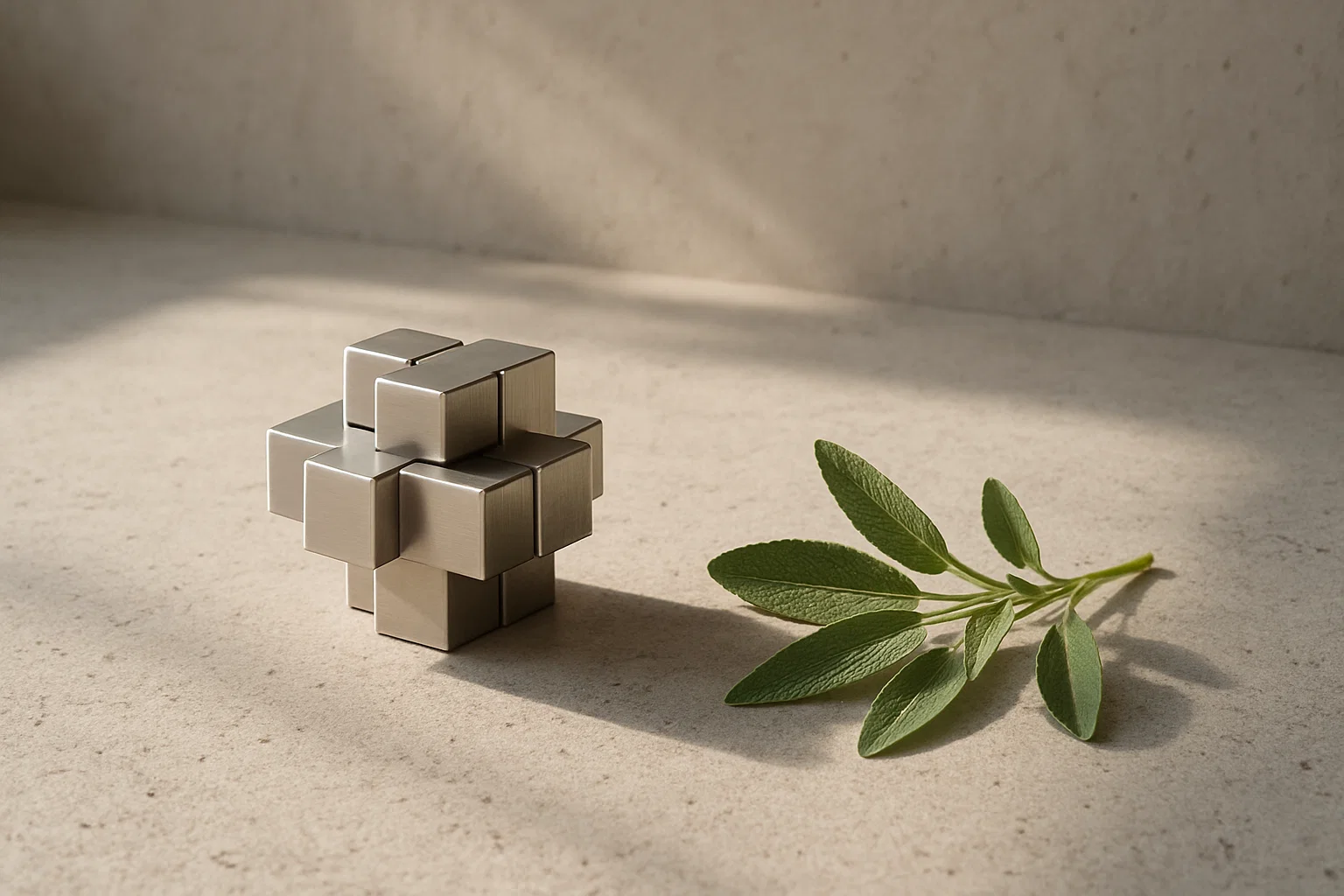
Creating metal puzzles offers a practical craft that naturally blends focused skill work with meditative calm. The process of designing, filing, fitting, and finishing metal puzzle pieces trains attention, steadies breathing, and cultivates a slow, deliberate mindset that mirrors formal meditation practices.
Cognitive and Attentional Benefits
Making metal puzzles strengthens sustained attention, causal reasoning, and spatial visualization. Designers practice sequencing and planning as they translate an idea into interlocking parts. The repetitive, goal oriented tasks involved in cutting and refining pieces reinforce task focus and reduce mental clutter.
Tactile Mindfulness and Stress Reduction
The cold weight of metal, the feel of edges as they meet, and the small, precise movements required engage the senses and ground awareness in the present moment. This sensory immersion functions like a mindfulness exercise by directing attention to immediate sensations and the rhythm of hand movements. The calming loop of focused action and small rewards lowers stress and brings emotional regulation.
Motor Skill Development and Precision
Working with metal builds fine motor control, hand strength, and tool fluency. Filing tolerances, aligning tabs, and smoothing joins demand steady hands and controlled force. These skills transfer to other crafts and mechanical reasoning and cultivate a disciplined, patient approach to problem solving.
Creativity, Design Thinking, and Problem Solving
Designing puzzles requires imagining multiple assembly paths and anticipating solver strategies. Creators balance constraint and surprise, iterate prototypes, and evaluate trade offs between difficulty and elegance. This cycle develops design thinking and adaptive problem solving that apply to engineering, teaching, and creative work.
Meditation Amplified by Maker Flow
The maker flow state that emerges during concentrated metalwork enhances the same neural patterns that meditation cultivates. Focus becomes effortless, self consciousness fades, and time perception changes. Regular practice of puzzle making deepens this flow, making it easier to enter calm, focused states both at the bench and off it.
Social Connection and Teaching Opportunities
Metal puzzles provide a tangible artifact for sharing skills, demonstrating principles, and running workshops. They serve as teaching tools for geometry, mechanics, and iterative design. Collaborating on a puzzle project strengthens communication, mentorship, and mutual discovery.
Practical Steps to Begin
- Start with a simple interlocking design and use soft, easy to cut metals.
- Set up a small, uncluttered workspace and gather basic hand tools.
- Work in short focused sessions to build steady attention without fatigue.
- Keep a notebook to sketch ideas, record tolerances, and note assembly sequences.
- Test prototypes with trusted solvers and refine shapes based on their feedback.
Creating metal puzzles is a craft that trains the hands and steadies the mind. The discipline of precise work, the sensory satisfaction of metal, and the slow accumulation of progress together produce a constructive form of meditation that sharpens cognition, calms emotion, and kindles creative thinking.
Products
-
 Truck G63 6x6
Free
Truck G63 6x6
Free
-
 THE QUEEN ANNE’S REVENGE (LARGE)
Free
THE QUEEN ANNE’S REVENGE (LARGE)
Free
-
 160 Bomber
$39.99
160 Bomber
$39.99
-
 Trucks T909
$32.99
Trucks T909
$32.99
-
 99A Main Battle Tank
$37.99
99A Main Battle Tank
$37.99