



Making 3D Metal Puzzles and Increasing Technical Knowledge and Abilities

Creating 3D metal puzzles is a hands‑on pathway to developing practical technical skills, deepening engineering intuition, and strengthening problem‑solving abilities. The craft blends design, fabrication, assembly, and testing into projects that deliver measurable skill gains and transferable technical knowledge.
How the process builds technical knowledge
- Design to specification
Designing interlocking metal parts requires converting a concept into precise dimensions and tolerances. Makers learn to read and produce technical drawings, think in three dimensions, and translate geometric relationships into manufacturable parts. - Material and process understanding
Working with metals teaches the properties of common alloys, effects of bending and work hardening, and how surface finish influences fit. Selecting appropriate cutting, bending, and joining methods reinforces knowledge about fabrication processes. - Tool and technique mastery
Using metalworking tools develops practical competence with hand tools and light power tools. Skills such as precise filing, sheet bending, riveting, and light machining build dexterity and give intimate feedback about force, alignment, and tooling limits. - Tolerance and fit reasoning
Iterating prototypes cultivates an intuitive sense for tolerances. Makers learn how small dimensional changes affect assembly, movement, and durability, and they practice corrective strategies such as reaming, filing, or shimming. - Systems and mechanism thinking
Building mechanical puzzles exposes linkages, interference fits, and kinematic relationships. Designers come to predict how parts interact, how loads transfer, and how sequence changes affect assembly and function.
Technical abilities gained
- CAD and drafting fundamentals
Translating a puzzle concept into plans encourages learning basic CAD or disciplined hand drafting, which are core skills for design engineering. - Prototype iteration and testing
Rapidly producing and testing mockups teaches experimental method: hypothesize, build, test, measure, and refine. - Problem diagnosis and repair
Troubleshooting misfits or binding teaches root cause analysis and corrective technique selection. - Precision measurement
Regular use of calipers, micrometers, and gauges improves measurement literacy and reduces guesswork. - Project planning and documentation
Estimating material needs, sequencing steps, and recording tolerances trains project management habits valuable in technical work.
Practical learning pathways and projects
- Start simple
Begin with flat interlock kits to learn cutting and bending before advancing to multi‑axis assemblies. - Progress to moving mechanisms
Add pivots, cams, and sliding fits to study kinematics and friction management. - Reverse engineer commercial models
Disassembling a purchased metal puzzle reveals design intent and practical joining techniques. - Build tools and jigs
Make bending jigs, press blocks, or holding fixtures to learn fixture design and improve repeatability. - Document each iteration
Keep a build log with dimensions, tools used, problems encountered, and solutions found.
Tools, workspace, and safety essentials
- Basic toolkit
Small files, hobby pliers, needle nose pliers, fine saws, clamps, sandpaper, and a machinist’s square establish core capability. - Measurement and marking
Calipers, a ruler with fine graduations, center punch, and scribe improve accuracy. - Workspace setup
A stable bench with good lighting and secure vice reduces errors and prevents injuries. - Safety practices
Eye protection, gloves when appropriate, and awareness of sharp edges preserve long‑term ability to practice and learn.
Transferable outcomes and career relevance
- Engineering readiness
The combined experience of design, fabrication, and testing mirrors small engineering projects and eases transition into formal technical roles. - Enhanced systems thinking
Understanding assemblies and interactions supports work in mechanical design, product development, and prototyping. - Improved manual dexterity and patience
Fine motor skills and iterative discipline increase effectiveness in laboratory work, repair tasks, and precision trades.
Conclusion
Making 3D metal puzzles is a compact, rewarding education in engineering fundamentals and practical skills. Each project reinforces design thinking, material literacy, precision work, and problem diagnosis while producing a tangible artifact that documents progress. Regular practice accelerates technical competence, sharpens judgement about fit and function, and builds confidence applicable across technical careers and hobbies.
Products
-
 Truck G63 6x6
Free
Truck G63 6x6
Free
-
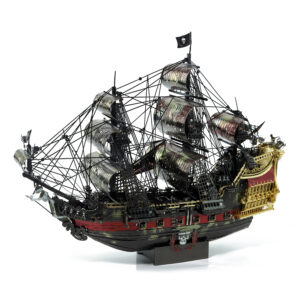 THE QUEEN ANNE’S REVENGE (LARGE)
Free
THE QUEEN ANNE’S REVENGE (LARGE)
Free
-
 160 Bomber
$39.99
160 Bomber
$39.99
-
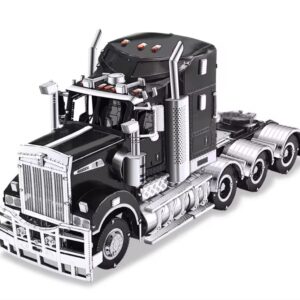 Trucks T909
$32.99
Trucks T909
$32.99
-
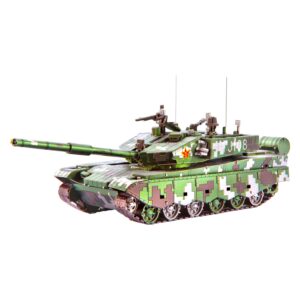 99A Main Battle Tank
$37.99
99A Main Battle Tank
$37.99